

Vedanta and Love
On November 21 , there will be a day-long course in center de Roos in Amsterdam with the Dutch Vedanta teacher Rommert van Dijk.
The subject is Vedanta and Love. What is love? Why do we experience a lack of love?
And how can we solve this?
For more info & ticket (21,- euro): www.vedanta.nl/vedanta-en-liefde

André Vas
Intensive Vedanta Retreat
From 8 to 18 january 2027
Thonse, Karnataka in India
From 4 to 11 july 2027
Summer week in the Vlierhof
The retreats are given by André Vas,
teacher from the lineage of Swami Dayananda.

Education in self-knowledge
The new Vedanta course starts on Thursday, October 1, 2026 with a meeting in Amsterdam.
You can register via sandermachielsen@gmail.com
For more info: www.advaita-vedanta.nl

Beginner course Sanskrit
The Sanskrit for Vedanta course has resumed! Every Wednesday from 7.00 pm to 8.30 pm on Zoom. The pace isn’t too fast, and we’ve already had a few lessons.
If you study the videos and lesson sheets (pdf below each video) of the first lessons, you can join.
For registration and information via simon@vedanta.nl
For videos and slides, see: Sanskrit course – Vedanta
For more info: Sanskrit for Vedanta
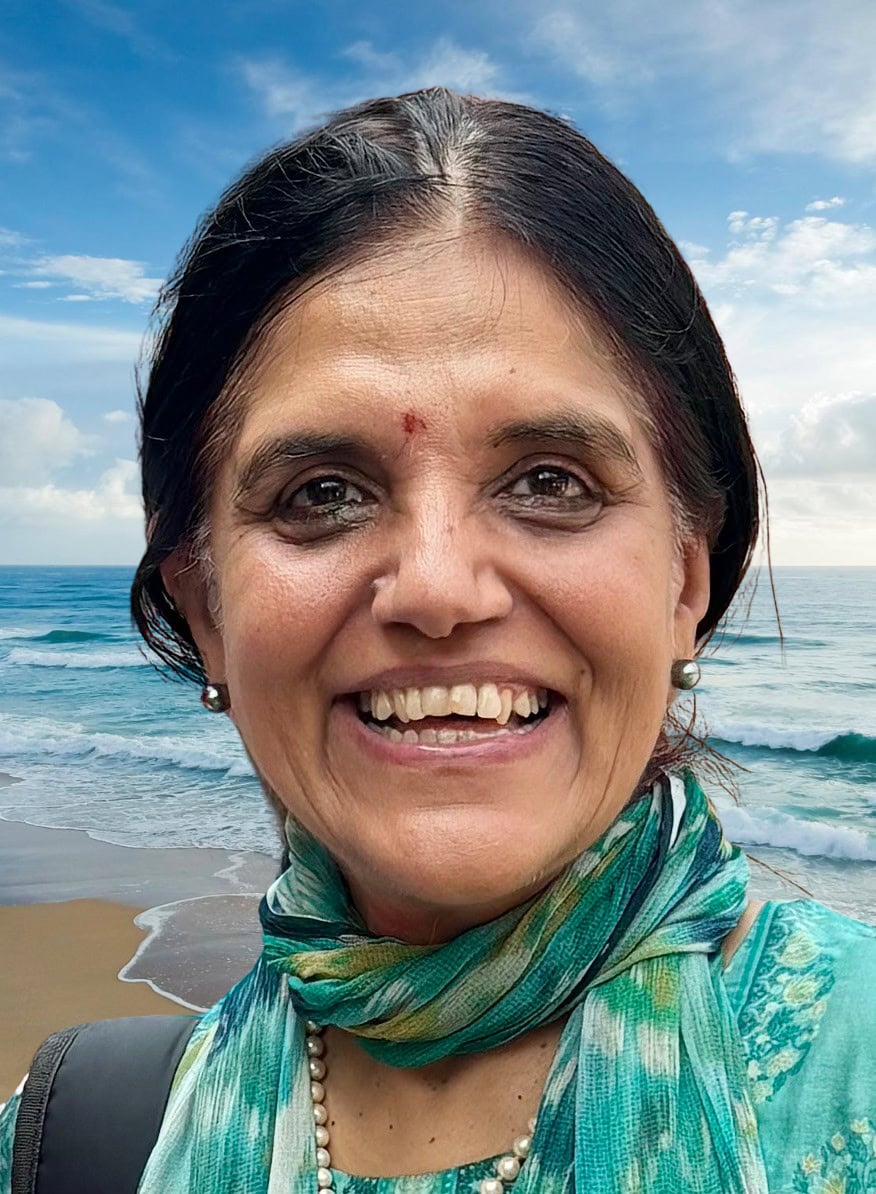
Neema Majmudar
Vedanta seminar
From 15 to 20 august 2026
in Samaya, Werkhoven (NL)
We are looking for lasting happiness. Not knowing that our nature is fullness, we endlessly search to complete ourselves through objects, situations, people, etc. Once we recognize our true nature, we can relate with everything else with freedom.
Swami Sarvapriyananda and Bernardo Kastrup

are coming to Amsterdam again
15, 16 and 17 May 2026.
An event organized by Samsara Publishers. Learn more.
Two leading thinkers:
Swami Sarvapriyanda, a respected teacher in Advaita Vedanta, and Bernardo Kastrup, a leading philosopher, scientist, and expert in the field of consciousness studies.
These sessions promise to be an intellectually challenging experience for all participants, allowing interaction with the speakers.
A link to the video recordings (with subtitles) of the meeting with Sw. Sarvapriyananda and Bernardo Kastrup in September 2025 will soon be available here.

Swami Sakshatkrtananda
Lecture ‘You & Vedanta’
Sunday evening, June 28
in Samaya, Werkhoven (NL)
Swami Sakshatkrtananda is the head of the Dayananda ashram in Rishikesh and is one of the most prominent students of Swami Dayananda Saraswati (1930-2015). For more than forty years, he has been dedicated to the knowledge of Advaita Vedanta. Swamiji is a walking encyclopedia of the Upanishads, the Bhagavad Gita and the Brahmasutras and is a beloved teacher for its clarity, precision and simplicity.

IVS Vedanta ashram Malden
Weekly meetings
(mantra chanting, meditation and reading)
Wednesday evening from 19.00 – 20.30
Friday morning from 10.30 – 12.00
Mantra chanting: Friday 25 September 19.30 – 21.30
and Friday 6 November 19.30 – 21.30
Meetings also in Eindhoven and Berlicum.
IVS Vedanta Ashram Bhagavan
De Kruigang 34 6581CW Malden (L.)
tel. 06-85705096


Art of Living
Sri Ravi Shankar
Learn the Sudarshan Kriya™️, a powerful breathing technique that helps you better deal with stress, anxiety and life’s challenges, during the Art of Breathing course with Swami Omkarananda.
Satsang
Meditating, mantra chanting and chanting: satsang ensures spiritual growth and elevation.
In various cities.
Swami Tadatmananda
Intensive Online Course
in Advaita Vedanta,
Meditation & Sanskrit
Starting 15 April 2026
all information: www.arshabodha.org/programs/online-course/

Rommert van Dijk
In Lelystad (also available online) Vedanta courses are given all year round, both for beginners and advanced.
Rommert was taught by Swami Dayananda.
ONLINE BASIC COURSE ADVAITA VEDANTA
From Thursday 3 September
19.30 – 21.00 hrs
Online via Zoom


Vedanta Online Course


Namaste! The caturvida purusharta sopana (steps) in the Shastras are sequenced as dharma; artha; kama; moksa because it is to be understood that unless you learn dharma, the artha and kama that you earn/enjoy are likely to be adharmic and hence moksha may not be feasible. For your considerations.
Sri Gurubhyo Namaha
Hari OM
Namaste dear Rajaraman,
Excellent. I understand where you are coming from. From Ishvara’s ‘standpoint’ it is dharma only, first of all as the principles (dharma’s, all the laws) that gives the world and life order and harmony. F.e. The dharma of fire is to shine and to be hot. If one is ‘ignorant’ of this fact, one cn hurt oneself or someone else. Because of non-duality of course for a human being hurting someone is hurting yourself. If a person lives a life in line with Ishvara’s dharma, and lives a righteousness, duty-full and ethical life, she or he will be qualified for the truth/knowledge/moksha. This is indeed the point true/ traditional vedanta makes. So dharma first.
If one is in ignorance, one does not live in harmony with this dharma, and is more attentive to artha-kama then pure dharma of course. Expecting the object-world to make her or him satisfied, full and secure, which is a deluded notion, as we know. Dharma is already inbuild in the antah:karana (inner instrument, mind) of the jiva (the living being), in the form of punya/papa feeling good or guilty about something etc. This has to come clear to light, be revealed by knowledge. Dayananda teaches that having the values of the 13th chapter of the Bhagavad Gita clear in mind, is also labeled ‘knowledge’. So violating these practical implications of the values is also out of ignorance. Behind this is the fact that all things, and all creatures are divine, whether they are ignorant or not.
How do we get ourselves in line with Ishvara/dharma? Through living the values, and by seeing clearly that all is isvara/dharma (upasana yoga) and acting upon it with karma yoga. Karma yoga is dharma yoga, acting as in a divine altar.
For the aspirant jiva, who first here’s vedanta, this is somehow a bit difficult to grasp, therefore the entry-purusartha-teaching is usually in the order artha, kama, dharma. This is to show where life problems are rooted (mainly because people tend to think that happiness comes from objects, not from one-self).
So coming from god/knowledge it is dharma first and only dharma (practically dharma trumps moksa). An aspirant at the other hand, coming from ignorance, has to be guided away from her or his urge for security (artha) and desire (kama), by showing why we suffer (because we think that joy is in inert things, bodies and minds). So you are right. The movement is from ignorance to the knowledge that dharma always comes first.
This is all meant to see that reality//brahman/atman is beyond dharma and adharma of course.
Thank you so much for initiating this.
I’ll try to add this subtle point to the dharma article at the Sanskrit-term list.